
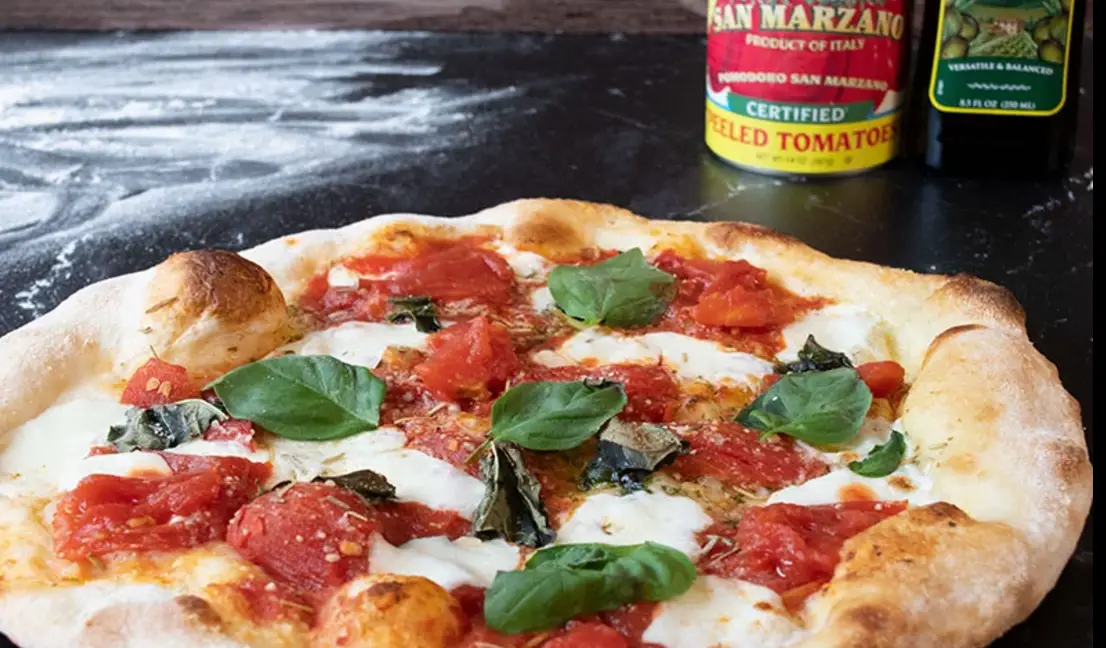
Born in Naples, Belonging to the World 🌍
Pizza Napoletana is not “Italian pizza” in a general sense—it is Naples itself. Its roots go back to the working-class neighborhoods of the 18th and 19th centuries, when flatbread met tomatoes newly arrived from the Americas. Cheap, nourishing, and fast, pizza became the fuel of dockworkers, craftsmen, and street life.
Today, it’s protected, regulated, and almost sacred.
When you eat a real Neapolitan pizza, you’re not just eating food—you’re participating in a culinary ritual that has survived wars, globalization, and Instagram trends.
What Makes It Truly Neapolitan?
Let’s be very clear: not every “thin pizza” is Pizza Napoletana.
Authenticity here is non-negotiable.
1. The Dough: Soft, Alive, and Fermented with Patience
The dough uses only:
- Italian “00” flour
- Water
- Sea salt
- Yeast
No oil. No sugar.
After long fermentation, the dough becomes elastic and airy. When stretched by hand (never a rolling pin), it forms a thin center and a thicker rim—the famous cornicione.
2. The Leopard Spots 🐆
Those dark, irregular charred dots on the crust? They’re not flaws. They’re called “leopard spotting”, and they are the signature of a pizza baked correctly at extreme heat.
If your pizza doesn’t have them, it wasn’t cooked the Neapolitan way.
3. The Oven: Wood-Fired or Nothing
A real Pizza Napoletana must be baked in a wood-fired oven, traditionally fueled by oak or beech wood, reaching temperatures over 450–485°C (850–900°F).
Baking time?
60 to 90 seconds.
That’s it.
The result:
- Soft, almost creamy interior
- Light smokiness
- Slight char that balances the sweetness of tomatoes
Electric or gas ovens simply can’t replicate this effect.
The Holy Quartet of Ingredients 🍅🧀🌿🫒
Pizza Napoletana doesn’t hide behind toppings. It stands naked and proud.
San Marzano Tomatoes
Grown in volcanic soil near Mount Vesuvius, these tomatoes are naturally sweet, low in acidity, and minimally processed. Crushed by hand. No cooking beforehand.
Mozzarella
Traditionally Mozzarella di Bufala Campana, though high-quality fior di latte is also accepted. It should melt gently, never flood the pizza.
Fresh Basil
Added by hand, torn—not chopped. Its aroma blooms instantly in the heat.
Extra Virgin Olive Oil
A light drizzle before baking. Peppery, grassy, alive.
That’s it. No garlic. No oregano overload. No extra cheese.
The Experience: Eat It Hot, Eat It Now ⏱️
Pizza Napoletana waits for no one.
It arrives at the table:
- Soft
- Slightly soupy in the center
- Fragrant with smoke and basil
This is not a pizza you slice and let cool. In Naples, people often fold it (“a portafoglio”) and eat it immediately. Knife and fork are acceptable. Hands are encouraged.
If the crust crackles loudly when you bite it, something went wrong. It should yield, not shatter.
Why It Ranked #2 Globally in 2025 🏆
In a world obsessed with reinvention, Pizza Napoletana ranked so high because it refuses to change.
Judges and food critics praised:
- Its purity
- Its historical continuity
- Its technical difficulty disguised as simplicity
Anyone can put toppings on dough.
Very few can master restraint.
Pizza Napoletana reminds us that the future of food sometimes lies in protecting the past.
My Personal Take as a Western Food Blogger ✍️
I’ve eaten pizza in New York, Chicago, Paris, Copenhagen, Tokyo, and Los Angeles. I love innovation. I respect creativity.
But when I want to remember why I fell in love with food, I go back to Naples.
I think of:
- Ash-dusted floors
- Blistered crusts emerging from flames
- Pizzaioli moving with the rhythm of musicians
Pizza Napoletana doesn’t ask for your attention.
It earns it.
Final Bite 🍕
Pizza Napoletana is not about excess.
It’s about balance, fire, and time.
If you ever find yourself in Naples, skip the trends. Stand in line. Trust the smoke. Eat it while it’s burning your fingers just a little.
That’s how it’s meant to be.
And honestly?
That’s how perfection tastes. 😌🍕